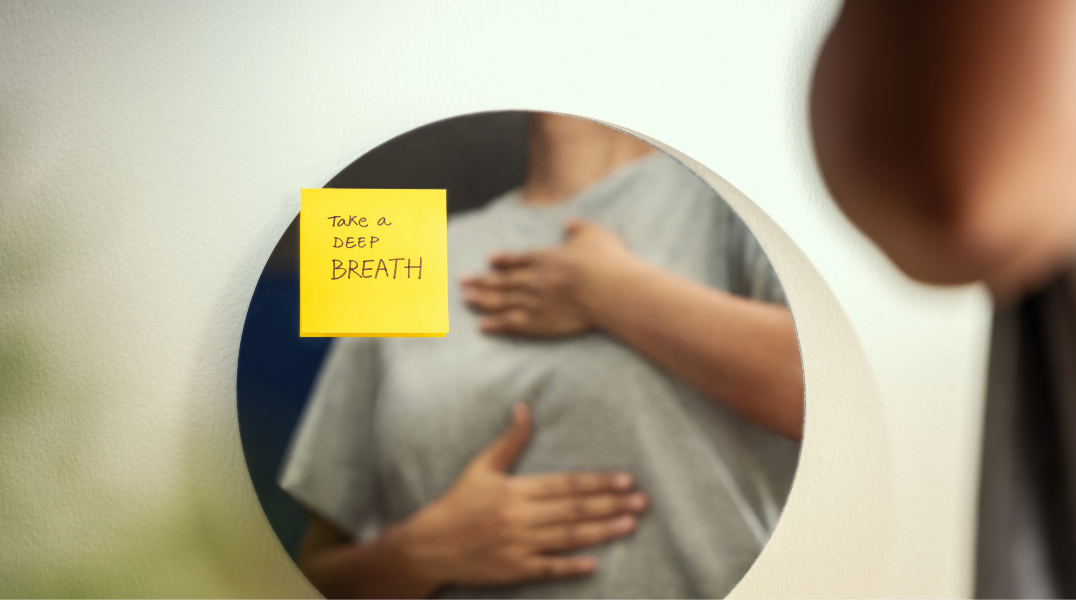

There is a cue repeated in yoga studios around the world, in Pilates classes, in meditation apps and wellbeing workshops: breathe deeply, fill your lungs completely. It is well-intentioned. The impulse behind it, encouraging people out of shallow upper chest breathing, is sound. But the instruction contains a physiological misunderstanding that gets in the way of proper breathing for yoga.
When we consider proper breathing for yoga, we are not referring to maximal inhalation. We are referring to efficient, sustainable breathing mechanics that support regulation rather than strain.
Efficient breathing is primarily diaphragmatic. The diaphragm does the work, and the ribcage expands in response. Alongside the diaphragm, the external intercostal muscles between the ribs assist with expanding the chest wall. These are the primary breathing muscles, and in a relaxed, well-regulated breath, they are sufficient.
There is a second group of muscles that also contribute to breathing, known as the accessory breathing muscles. These sit in the neck, across the upper chest, and around the shoulders. They are always involved to some degree, but in a relaxed breath their contribution is small. They come into their own when breathing demand rises sharply, during intense exercise, in respiratory distress, or under acute psychological stress, when the body needs to move air faster and in greater volume than the diaphragm and intercostals alone can comfortably provide. The more heavily they are recruited, the more the breath resembles one under strain.
When a student attempts to literally fill what they believe to be their entire lung capacity, the body overrecruits these accessory muscles to haul the ribcage upward and outward in search of more volume. This inherently causes tension. The shoulders rise, the neck tightens, and what was meant to bring calm becomes effortful and strained. Overactivating these muscles repeatedly through practice may also result in soreness and pain in the shoulders and neck, muscles that were never designed to sustain that kind of load through an hour of breathwork.
It is the opposite of what the practice intends. It is also a consequence of teaching breathwork without a full understanding of respiratory physiology, something that, with the best intentions, much of the yoga community has yet to address.
The Truth About Filling the Lungs
The total lung capacity of an average adult is approximately six litres. A normal, healthy resting breath, the tidal volume, moves around 500 millilitres. Because the lungs already contain around 2.4 litres of air at rest, the maximum anyone could actually inhale in a single breath to reach total lung capacity is around 3.5 litres.
That is a maximal, effortful breath, the kind performed in clinical lung function testing, not in a yoga class. It is not comfortable, it is not sustainable, and it bears no resemblance to regulated breathing.
In a yoga class, a slow and intentional deep breath can increase tidal volume to around 1,500 to 2,500 millilitres. When taken gently, that breath drops naturally into the lower lungs, where the diaphragm draws air downward and the lower lobes, more richly supplied with blood vessels for gas exchange, are fully engaged.
A forceful breath taken in an attempt to fill the lungs may move more air overall, but it tends to go to the wrong place. When a breath is rapid and intense, the alveoli in the lower lungs become less elastic and less receptive, so the air takes the path of least resistance into the upper chest instead. The result is the very tension already described, while simultaneously bypassing the region of the lung where gas exchange is richest.
This is further compounded at the receptor level. The lungs contain different types of receptors that monitor and respond to the breath. Among these are pressure receptors, specifically Slowly Adapting Receptors and Rapidly Adapting Receptors. Slowly Adapting Receptors respond to gentle and gradual lung inflation and are associated with calm breathing. Rapidly Adapting Receptors respond to forceful and high pressure inflation, exactly what happens when a student strains to overfill the lungs, and signal to the body that the breath is under stress.
The student is not only missing the lower lungs. They are actively triggering a response that works against calm.
The Rate of the Breath
Breathing deeply and gently is, by its nature, slow. The two qualities are inseparable. A breath that is genuinely easy and full cannot be rushed. The time it takes for air to descend into the lower lungs, for the diaphragm to complete its descent, and for the ribcage to expand without strain is part of what makes the breath beneficial.
Slowing the breath deliberately to around five to six breaths per minute produces specific and measurable effects that go beyond relaxation in any general sense. This is the basis of resonance frequency breathing, the rate at which the breathing cycle and the cardiovascular system fall into synchrony, sometimes described as physiological coherence. At this rate, heart rate variability increases and blood pressure reduces. These are not vague markers of calm. They are concrete physiological shifts produced by pace alone, independent of volume.
A slow and gentle breath need not be large, need not recruit accessory muscles, and need not strain for capacity. Slowness and gentleness are not just compatible. In well-cued breathing, they are the same thing.
A Better Cue for Proper Breathing for Yoga
The instruction breathe gently and deeply, in a way that feels long and easy is not only more accurate. It describes a breath that the body can deliver sustainably across a sixty minute practice, or during moments of a difficult day when someone returns to their breath as an anchor.
Useful accompanying cues include:
Let the belly soften as you inhale. This directs attention toward diaphragmatic descent rather than excessive thoracic expansion.
Breathe gently and slowly, and stop when the lungs feel comfortably full. This removes the sense of striving for a quota and keeps the breath within a range the body can receive without effort.
Notice where the breath goes without directing it. This brings awareness without force.
None of these cues produce a lung that is full in any clinical sense. They produce breathing that is diaphragm-led, mechanically efficient, and neurologically settling. That is the actual aim of proper breathing for yoga.
Encouraging Proper Breathing for Yoga Beyond the Yoga Room
Breathing instruction is increasingly crossing into clinical contexts. Breathwork is used in the management of anxiety disorders, PTSD, chronic pain, and hypertension. As yoga teachers and wellness practitioners move into these spaces, the precision of their language carries real weight.
A physiotherapist or GP assessing a patient’s breathing will not be reassured by a framework built on anatomical inaccuracy, however well meaning. When yoga enters healthcare settings, respiratory physiology must stand up to scrutiny.
This is not an argument for making yoga classes sound like anatomy lectures. The warmth, the permission, and the invitation to slow down and arrive in the body are central to yoga. Precise language does not displace that. A cue that is both physiologically accurate and human to say aloud, breathe gently, breathe deeply, let it feel long and easy, serves the practice better than one that asks the body for something it cannot give.
Accuracy and accessibility are not in tension. In the case of proper breathing for yoga, they are the same thing.