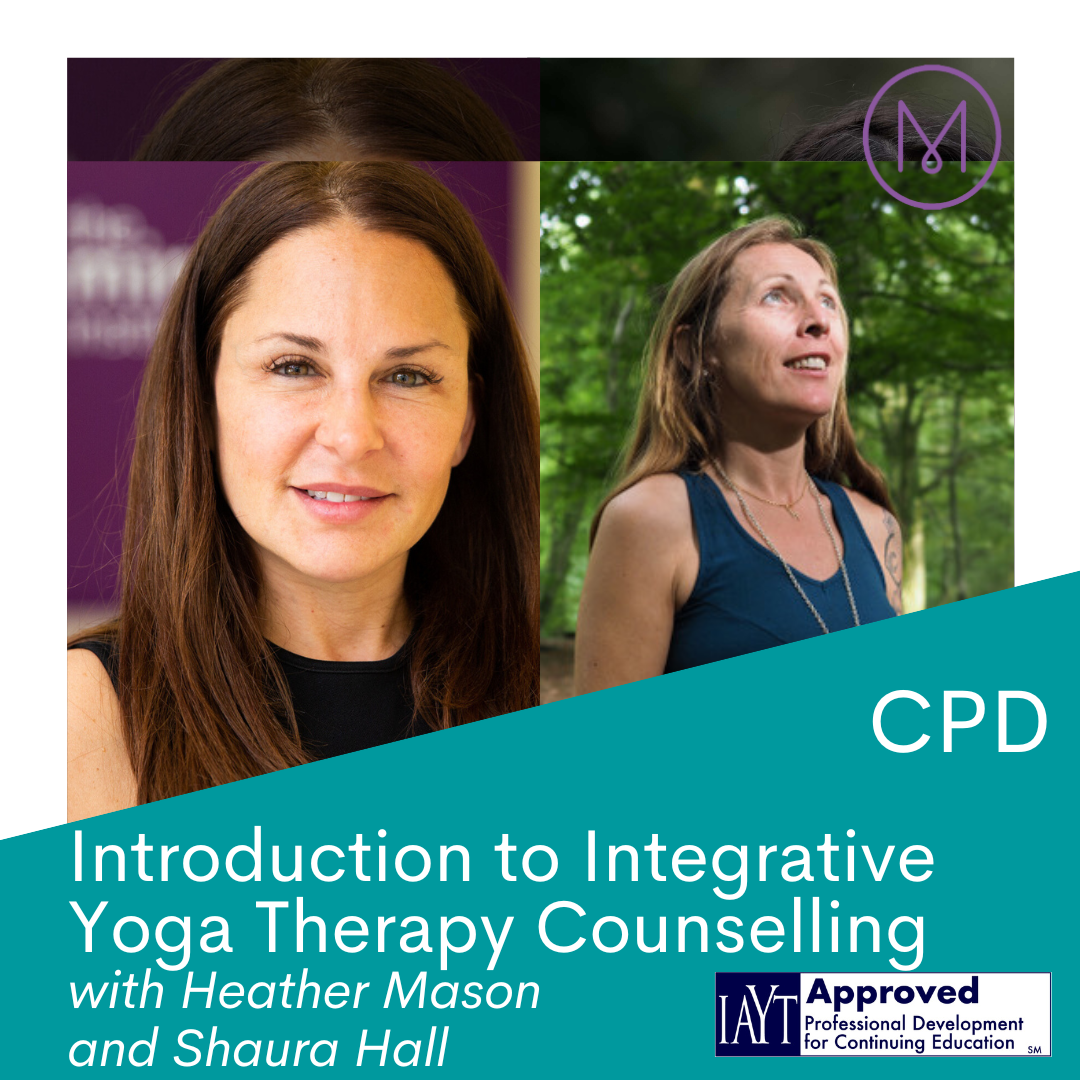
Introduction to Integrative Yoga Therapy Counselling
Date:
Dates tbc – click here to join the Priority List for first access and a limited-time booking offer.
Time:
9am - 5pm (each day, UK time)
Introduction to Integrative Yoga Therapy Counselling is a five-day counselling skills training for yoga teachers, yoga therapists, and health professionals working in one-to-one settings.
The course integrates person-centred counselling skills with applied physiology, somatic awareness, and yogic philosophy and psychology. It supports practitioners to work with emotional material, relational dynamics, and nervous system states as they arise, through embodied presence, ethical clarity, and regulation rather than technique alone.
This training offers 32.5 IAYT-approved CPD hours. No prior counselling training is required.
Dates tbc – click here to join the Priority List for first access and a limited-time booking offer.
Payment plans available – contact accounts@themindedinstitute.com for details.
Description
Person-Centred Counselling Training for One-to-One Work, Integrating Physiology, Somatic Awareness, and Yogic Philosophy and Psychology
Integrative Yoga Therapy Counselling is a counselling skills training taught by Heather Mason and Shaura Hall, drawing on their combined work in clinical teaching, supervision, and yoga therapy education through The Minded Institute and The Pilamaya Centre for Integration Psychotherapy. The training responds directly to the realities of one-to-one work, where emotional material, relational dynamics, and nervous system states inevitably arise.
It brings together person-centred counselling, applied physiology, somatic awareness, and yogic philosophy and psychology as a unified approach to relational practice. The training is grounded in ethical clarity, regulation, and embodied presence rather than technique alone, supporting safe and responsive counselling work.
Designed for yoga teachers, yoga therapists, and health professionals. No prior counselling training is required.
This training supports practitioners who want to develop counselling skills that fit with embodied, nervous-system-informed work. It is particularly relevant for those working one-to-one, where emotional material and relational dynamics arise alongside physical and physiological processes.
Yoga Therapy: An Embodied Framework for Therapeutic Work
Yoga therapy is a therapeutic discipline that works directly with physiological regulation, embodied experience, and meaning-making. It attends to the nervous system states that underpin emotional experience and relational capacity, rather than relying on cognitive insight or behavioural change alone.
Yoga therapy uses the kosha model as a diagnostic and organising framework, understanding the human being as comprised of interrelated dimensions of body, breath, mind, meaning, and the capacity for insight and connection. This enables emotional material to be approached through regulation, embodiment, and lived experience.
Within this counselling training, yoga therapy provides a trauma-informed, regulation-based foundation for relational and counselling work. Counselling skills bring structure, ethical precision, and psychological clarity to this foundation, supporting practitioners to respond skilfully as emotional material arises in one-to-one settings. Together, yoga therapy and counselling skills form an integrated, clinically grounded approach to relational practice.
What Makes This Counselling Training Distinct
Physiological literacy as a foundation
Counselling skills are taught through an applied understanding of psychophysiological states, polyvagal theory, embodied attunement, and neuroplasticity. This enables practitioners to recognise shifts in regulation, safety, and engagement as they occur, and to respond with precision rather than assumption.
The joint use of bottom-up and top-down approaches
Embodied awareness and regulation accompany the development of counselling skills. Breath, grounded movement, and somatic attunement support cognitive and relational processes, allowing therapeutic presence to arise in real time rather than through cognitive effort alone.
Wisdom traditions as an integrated foundation
Yogic and Buddhist wisdom traditions are included not as belief systems, but because they contribute in two specific and functionally distinct ways to counselling and relational practice:
• These traditions provide concrete, time-tested methods for developing the qualities associated with effective counselling skills, including sustained attention, ethical sensitivity, emotional steadiness, and reflective self-awareness. Rather than assuming these capacities emerge automatically through practice, the training draws on structured methods for cultivating and stabilising them over time. This supports practitioners to remain present, responsive, and accountable when emotional intensity rises, not through technique selection, but through developed capacity.
• Training designed for genuine integration. Some practitioners arrive with embodied and somatic experience and need counselling skills; others arrive with relational or clinical training and need physiology and somatic understanding. By integrating counselling skills with regulation and embodied awareness, the training enhances the effectiveness of both, creating a coherent whole that is more clinically useful than either approach in isolation.
Course Structure
5 Days | 32.5 Contact Hours | Live Online
Day 1: Presence, Attending, and Listening
Foundations of therapeutic attention, embodied listening, nervous system regulation, and dharana (focused attention).
Day 2: Empathy, Acceptance, and Warmth
Unconditional positive regard, the physiology of empathy, co-regulation, and ahimsa (non-harming).
Day 3: Truthfulness and Therapeutic Integrity
Congruence, embodied authenticity, physiological alignment, and satya (truthfulness).
Day 4: Clarifying and Deepening Understanding
Reflective inquiry, somatic markers, attunement to dysregulation, and svadhyaya (self-inquiry).
Day 5: Integration, Challenge, and Reflection
Summarisation, nervous system integration, compassionate challenge through tapas, and samadhi (wholeness).
By the end of the counselling training, participants will be able to:
- Practise counselling skills as embodied and relational processes, working with attention, sensation, emotion, and relationship as an integrated whole.
- Demonstrate therapeutic presence through attending, deep listening, and attunement, recognising how posture, breath, regulation, and self-awareness shape relational safety and trust.
- Listen accurately and reflectively, with awareness of how personal history, projection, and unconscious bias influence perception, and develop the capacity to suspend judgement in counselling work.
- Cultivate empathy, acceptance, and warmth as lived qualities of presence, understanding how these support regulation, safety, and ethical connection without emotional merging or over-identification.
- Work with truthfulness and therapeutic integrity, recognising how congruence, discernment, and ethical self-awareness support authenticity, appropriate self-disclosure, and responsible communication
- Use questioning, clarification, and reflective enquiry to support clients in deepening their understanding, without leading, interpreting, or imposing meaning
- Recognise and respond to relational feedback, including resonance, rupture, fatigue, and countertransference, as informative signals rather than indicators of failure.
- Apply compassionate challenge and summarisation to support integration and meaning-making, with sensitivity to timing, safety, and relational balance.
- Integrate learning into reflective practice, developing the capacity to review experience, recognise personal patterns, and remain accountable to ethical and embodied presence.
- Translate insight into responsible action, bringing presence, clarity, and relational awareness into professional contexts with sensitivity to difference, culture, and lived experience.
Assessment and Accreditation
This is an experiential, skills-based counselling training. Assessment includes reflective journalling, observed practice, peer and self-evaluation, and group reflection on safety, inclusivity, and professional responsibility.
Participants receive CPD hours accredited by the International Association of Yoga Therapists (IAYT) and the National Council of Integrative Psychotherapists (NCIP).
This training serves as one of the optional CPDs for Minded students on the IAYT path.
Course Details & Enrolment
Dates: Dates tbc – click here to join the Priority List for first access and a limited-time booking offer.
Time: 09:00–17:00 UK time
Format: Live online via Zoom, with supporting materials provided through a learning platform
Investment: The 2026 course was £750
Payment plans: Available on request – please contact accounts@themindedinstitute.com
Teachers
Heather Mason, MA, MA, MSc, C-IAYT
Founder, The Minded Institute
Heather Mason has trained yoga therapists and health professionals for over fifteen years. She holds master’s degrees in Buddhist Studies, Psychotherapy, and Medical Physiology, with extensive training in neuroscience. She has taught at Harvard Medical School, Boston University School of Medicine, and the Maryland University of Integrative Health, and is a founding trustee of the Yoga in Healthcare Alliance.
Shaura Hall, C-IAYT, NCIP
Founder, The Pilamaya Centre for Integration Psychotherapy
Shaura Hall is a Neurosomatic Psychotherapist, Certified Yoga Therapist, Therapeutic Supervisor, and Interfaith Minister. She is Course Director of the Level 5 Diploma in Integration Psychotherapy and has been a senior lecturer and supervisor at The Minded Institute for over a decade.
Payment Options & Fees
You can pay securely at checkout using a credit or debit card or PayPal.
If you experience any issues during purchase, please contact accounts@themindedinstitute.com and our team will be happy to assist.
Pay in Instalments
To make our courses as accessible as possible, bespoke payment plans may be available on a case-by-case basis.
If you would like to request a payment plan, please email accounts@themindedinstitute.com.
Please note:
-
The full course fee must be paid no later than seven days before the course start date
-
Once a payment plan has commenced, refunds follow our standard refund policy as outlined in the Terms and Conditions
Training Terms and Conditions
You can review the Professional Training Terms and Conditions for courses with The Minded Institute here.
Location
We use Zoom to host these online trainings, for those who do not yet have an account, please visit http://zoom.us and sign up for a free account. Please also test your computer audio and visual to ensure they are working prior to the training start time.
You will receive a zoom link and password in your confirmed booking email, which will come from: info@themindedinstitute.com
Related products
-

Online CPD: Lakshmi Voelker Further Chair Yoga Skills – Part 2
£395.00 Book this TrainingDate: Friday, 11th - Sunday, 13th June 2027
Time: 10am - 5pm (each day, UK time)
-

Online CPD: Yoga Therapy for Menopause
View products -

Online CPD: Lakshmi Voelker Accessible Chair Yoga Teacher Training – Part 1
£395.00 Book this TrainingDate: Friday, 12th - Sunday 14th March 2027
Time: 10am - 5pm (each day, UK time)
-
On Demand Audio: 8 Week Course – Guided Practice Tracks
£5.00 Purchase Audio