

When the clocks go back and daylight fades, many people feel their mood and energy shift with the season. This experience, known as Seasonal Affective Disorder (SAD), can affect concentration, motivation and sleep. Practising yoga for Seasonal Affective Disorder offers gentle, evidence-informed ways to restore balance, regulate mood and reconnect with the body’s natural rhythm through breath and movement.
Inner Peace and Outer Change: How Yoga for SAD Helps
Jon Kabat Zinn, who helped bring mindfulness into medicine, reminded us that we cannot escape ourselves — that wherever we go, our mind and body follow. We must find peace within, rather than expecting changing circumstances to make life, or the mind, easier to bear.
There is deep truth in this.
But there is also another reality: many people are profoundly affected by their environments.
This is what psychosocial factors describe — the ways that surroundings, relationships and life conditions shape the nervous system. When the outer world changes, so does our inner state. Those who experience Seasonal Affective Disorder know this all too well.
For more on the science behind this connection, see the American Psychological Association’s overview of SAD.
Understanding Seasonal Affective Disorder and Why Yoga Can Help
Across Europe and North America, this reality becomes visible each winter.
Seasonal Affective Disorder affects around 2 to 5 percent of adults in temperate climates. In northern regions such as Scandinavia, Scotland and Canada, rates can rise to 10 percent or more.
In the United States, research suggests about 5 percent of adults experience SAD each year, with symptoms lasting for roughly 40 percent of the year. Women are about four times more likely than men to be affected.
In Europe, the prevalence increases with latitude — the farther north, the darker the winters and the greater the physiological impact on mood, circadian rhythm and energy regulation.
Learn more about these statistics from the National Institute of Mental Health.
These findings underline an important truth: mood is biological, social and environmental all at once. Yoga therapy for SAD recognises this connection — that mind, body and environment continually shape one another.
How Yoga for Seasonal Affective Disorder Supports the Nervous System
When daylight decreases, the body’s internal rhythm can fall out of sync. Reduced sunlight influences serotonin, melatonin and sleep cycles, leading to low mood, fatigue and loss of motivation.
Practising yoga for SAD helps to rebalance the nervous system through breath, gentle movement and mindful awareness. Research shows that slow breathing activates the parasympathetic response, reducing stress hormones and stabilising mood.
Yoga does not replace medical care, but it offers complementary tools to regulate energy and emotion when the world outside grows dimmer.
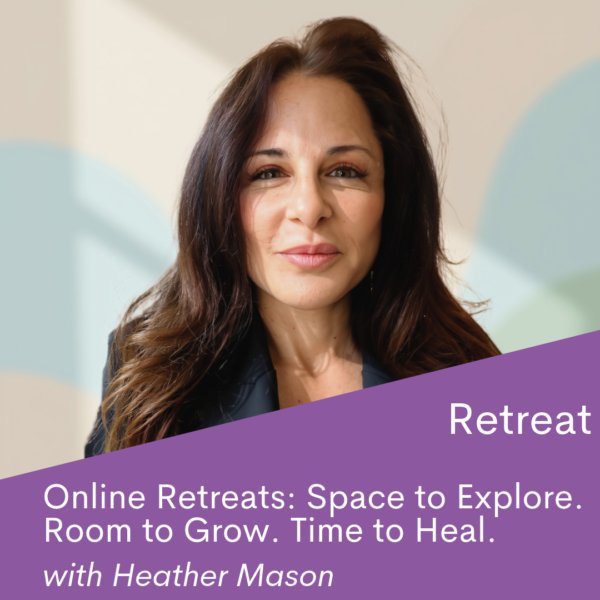
If you would welcome time for guided practice, rest and reflection, explore our standalone online retreats with Heather Mason. Each retreat brings together yoga therapy and contemplative practice, with dates available throughout the year.
Yoga for SAD Practice: Dirgha Pranayama (Three Part Breath)
Dirgha Pranayama (also known as Deergha Svasam or Sama Vritti) is a calm, steady breathing technique that helps release tightness in the chest and restore openness when winter feels heavy.
Try this practice each morning:
-
Find your seat
Sit comfortably near natural light if possible, though it is not essential. Let your spine be tall and your shoulders relaxed. -
Breathe in three parts
Take three gentle, consecutive inhales: first into the belly, then the ribs, then the chest. As you breathe, allow the chest to lift softly without strain. -
Exhale with awareness
When the lungs feel comfortably full, exhale slowly through the nose, imagining heaviness leaving the body. -
Visualise light
On the next inhale, sense that each breath carries both prana and light into the body. Imagine golden light filling you from base to crown, and exhale what feels heavy. -
Stay for five minutes
Continue for around five minutes. Notice the calm expanding through the chest and the soft brightness that follows.
Regular practice can relax the nervous system, improve breathing patterns and help maintain emotional steadiness during darker months.
Meeting Yourself Through the Changing Light
Sometimes we need help to be with the mind, especially when outer conditions alter its patterns.
Yoga for Seasonal Affective Disorder reminds us that healing involves both inner and outer awareness.
Through breath, movement and presence, yoga therapy teaches us to recognise how environment, biology and consciousness continuously influence one another — and how to meet ourselves gently, even when the light is scarce.
As Jon Kabat Zinn said, Wherever you go, there you are.
Yoga helps us make that place a little brighter.