
Dirga Pranayama, often called the three-part breath, is one of the most accessible yet powerful pranayama techniques in yoga. Rooted in traditional breathwork practices and increasingly recognised in therapeutic settings, Dirga teaches us to breathe with greater awareness, depth, and regulation.
Whether you’re new to yoga, a seasoned practitioner, a yoga therapist, or a health professional exploring mind–body approaches, Dirga offers a simple way to calm the nervous system, strengthen the respiratory system, and cultivate a more attuned relationship with the body.
What Is Dirga Pranayama?
Dirga Pranayama is a staged inhalation technique followed by a slow, unforced exhale.
It involves:
-
Breathing in gently through the nose
-
Pausing
-
Inhaling a little more
-
Pausing again
-
Taking a final sip of air
-
Then exhaling smoothly and completely
This step-by-step approach increases sensory awareness and encourages greater control over the breath, without strain or effort.
Unlike more forceful pranayama techniques, Dirga is soft, grounding, and suitable for most practitioners when guided appropriately.
The Science Behind Dirga
The respiratory system contains extensive sensory receptors that send information to the brain about stretch, pressure, and airflow. When we inhale in stages, as we do in Dirga, these receptors activate multiple times, enhancing awareness of the lungs and chest and promoting a calmer breathing rhythm.
Slow, controlled breathing is also known to engage the parasympathetic nervous system, helping to reduce physiological arousal, regulate the stress response, and support emotional wellbeing.
Three Key Benefits of Dirga Pranayama
1. Improves Breath Control and Relaxation
Dirga Pranayama refines the engagement of the diaphragm and intercostal muscles.
By inhaling in stages, you:
-
Cultivate finer control over the breath
-
Strengthen respiratory coordination
-
Encourage smoother transitions between inhale and exhale
This refinement can help reduce breath-holding, upper-chest tension, and the shallow breathing patterns often associated with stress.
2. Deepens the Calming Effect of the Exhale
Because Dirga increases the total volume of each inhalation, many people find it easier to:
-
Slow down the exhale
-
Lengthen the out-breath
-
Release residual tension in the body
A longer exhale supports the vagus nerve and encourages parasympathetic activation—the physiological basis of feeling more settled, present, and at ease.
When paired with a gentle Ujjayi breath, this effect can deepen further by adding a soft auditory cue to help regulate rhythm and pace.
3. Enhances Interoception and Body Awareness
Interoception, the ability to sense internal states of the body, is a key component of emotional regulation and self-awareness.
Dirga strengthens interoception by:
-
Providing repeated sensory feedback from the lungs
-
Bringing attention to subtle shifts in chest and abdominal expansion
-
Increasing awareness of how breath influences physical and emotional states
For many practitioners, this improved internal sensing becomes a foundation for more mindful movement, healthier self-regulation, and a greater sense of embodiment.
How to Practise Dirga Pranayama
Here is a simple way to try Dirga:
-
Sit comfortably or lie down with the spine neutral.
-
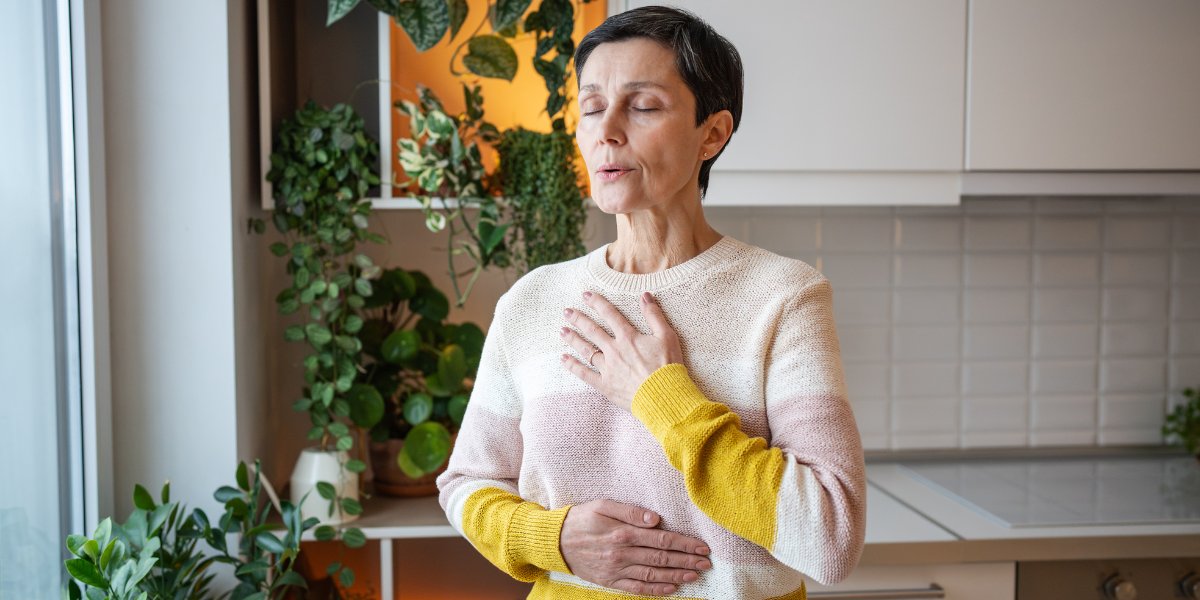
Place one hand on the abdomen and one on the ribs if this feels supportive.
-
Inhale a small amount through the nose and pause briefly.
-
Inhale a little more and pause.
-
Take a final gentle sip of air.
-
Exhale slowly and steadily.
-
Continue for 5–10 cycles, aiming for ease rather than depth or effort.
If at any point the breath feels strained, shorten the pauses or return to natural breathing.
Who Can Benefit from Dirga?
Dirga Pranayama can be helpful for:
-
Individuals experiencing stress or anxiety
-
People working with shallow or irregular breathing patterns
-
Students wanting to deepen breath awareness
-
Clients in yoga therapy settings who need gentle regulation tools
-
Anyone seeking a simple breath practice to create more ease
Because Dirga is subtle and modifiable, it can be integrated into many settings, from yoga classes to therapeutic sessions—and even everyday life.
Bringing Dirga Into Daily Practice
Dirga works best when practised regularly, even for short periods. You might explore it:
-
Before meditation
-
At the start or end of a yoga session
-
During moments of transition in your day
-
As part of a grounding routine before sleep
-
When you notice the breath becoming shallow or fast
With repetition, Dirga can become a natural tool for settling the mind and reconnecting with the body.
Conclusion
Dirga Pranayama is more than a breathing technique; it is a practice of mindful attention, nervous system regulation, and embodied awareness.
Its simplicity makes it accessible; its depth makes it transformative.
Whether you are learning to calm your breath, enhance interoception, or support clients therapeutically, Dirga offers a gentle yet powerful way to shift how you breathe and how you feel.
Dirga is one of many foundational practices taught within our Yoga Therapy Diploma, where students learn how breathwork interacts with physiology, psychology, and the nervous system. Throughout the training we explore how pranayama can be adapted safely and effectively for diverse health needs, giving future yoga therapists the confidence to apply these tools in evidence-informed, person-centred ways.
If you’d like to deepen your understanding of breathwork and learn how to integrate techniques like Dirga into therapeutic settings, our diploma provides the structure, guidance, and clinical insight to support that journey.