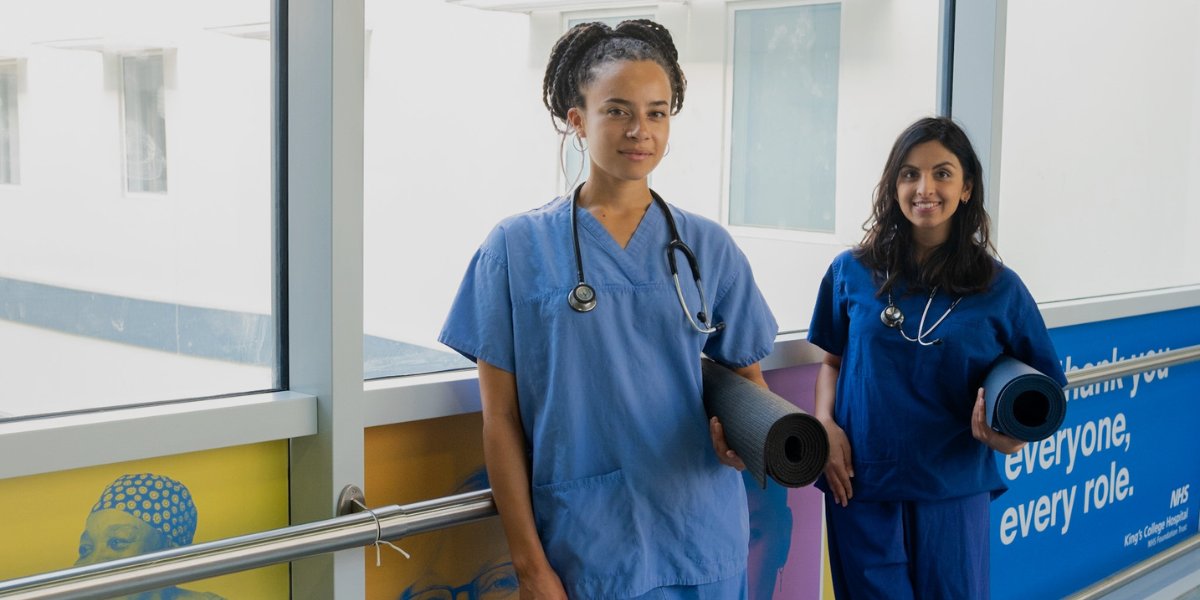
A recent article in The Guardian looking at the way the Covid-19 pandemic may have re-wired our brains was particularly fascinating to us. As many of you will be aware, we are organising a symposium on Wellness after Covid in May which brings together leading experts from across the disciplinary spectrum — including medicine, public health, and therapeutic yoga – for dynamic conversations about yoga, COVID- 19, and the future of healthcare and to disseminate what the latest research reveals about how yoga can enhance resilience and bolster healthcare systems burdened by the COVID-19 crisis.
Its worth taking a look at the whole Guardian article here, but here’s a few things that stood out for us…
“The pandemic is expected to precipitate a mental health crisis, but perhaps also a chance to approach life with new clarity”
“People talk about the return to normality, and I don’t think that is going to happen,” says Frank Snowden, a historian of pandemics at Yale…Snowden believes that Covid-19 was not a random event. All pandemics “afflict societies through the specific vulnerabilities people have created by their relationships with the environment, other species, and each other,” he says. Each pandemic has its own properties, and this one – a bit like the bubonic plague – affects mental health. Snowden sees a second pandemic coming “in the train of the Covid-19 first pandemic … [a] psychological pandemic”.
Aoife O’Donovan, an associate professor of psychiatry at the UCSF Weill Institute for Neurosciences in California, who specialises in trauma, agrees. “We are dealing with so many layers of uncertainty,” she says. “Truly horrible things have happened and they will happen to others and we don’t know when or to whom or how and it is really demanding cognitively and physiologically.”
The impact is experienced throughout the body, she says, because when people perceive a threat, abstract or actual, they activate a biological stress response. Cortisol mobilises glucose. The immune system is triggered, increasing levels of inflammation. This affects the function of the brain, making people more sensitive to threats and less sensitive to rewards.
In practice, this means that your immune system may be activated simply by hearing someone next to you cough, or by the sight of all those face masks and the proliferation of a colour that surely Pantone should rename “surgical blue”, or by a stranger walking towards you, or even, as O’Donovan found, seeing a friend’s cleaner in the background of a Zoom call, maskless. And because, O’Donovan points out, government regulations are by necessity broad and changeable, “as individuals we have to make lots of choices. This is uncertainty on a really intense scale.
So will the pandemic alter us for the long term?
O’Donovan, in San Francisco, who has for years studied post-traumatic stress disorder, believes an increase in the incidence of PTSD will probably follow Covid-19. It is also likely that Covid‑19 will challenge the criteria for diagnosing PTSD. While 20% to 30% of those who go into intensive care units will later experience PTSD, what of those who fear for their lives in previously innocuous situations – such as in the grocery store or on public transport? Might PTSD be triggered by a close stranger’s uninhibited cough? There are people who recovered from Sars in 2003 and were still being treated for PTSD more than a decade later. “We have a lot of work to do,” O’Donovan says.
No wonder, then, that for Thomas Dixon, the emotional historian, the pandemic is “akin to a world war” in its emotional fallout. “We will have, I assume, a global recession. There is going to be serious suffering and inequality and poverty. It is a world event with big emotional consequences, and it seems to me that in times of adversity people’s emotional repertoire changes,” he says. He thinks that “a more resilient, and perhaps more reserved, emotional style” might evolve out of the pandemic and its aftermath.
Snowden says: “There are silver linings in something uniquely bad and dark. Maybe as a result of this we will transform our healthcare system so that it pays proper attention to mental as well as physical health. Maybe [the pandemic] will help us rethink what medicine is for.”
If you’re interested in the opportunity to tranform our Healthcare systems, our upcoming symposium ‘Wellness After Covid Symposium’ looks at how yoga and health professionals can collaborate to transform public health policy, with the aim of integrating yoga in National COVID-Recovery Plans.
Here at The Minded Institute you can study the ways in which yoga engenders neuroplastic changes via our online training. Both ancient yoga texts and modern research express yoga’s potential to reduce stress and anxiety. Given that anxiety is so common and anxiety disorders are amongst the most prevalent of mental health conditions, it is important that yoga professionals understand how yoga can mitigate anxiety in the short and long-term. Our On demand training ‘Rewiring The Anxious Brain Through Yoga‘ looks at specific yoga practices that support the rewiring of the anxious mind, for example.
Our ‘Trauma Yoga and Neuroplasticity’ Online Course explores the ways in which trauma can impede normal brain development or alter the functioning of the adult brain. Through mind-body practices is it possible to engender neuroplastic changes in both a healthy brain and a brain impacted by traumatic events. It explores the mechanisms of action through which yoga inspires brain changes and their unique application to trauma.