
Most yoga backbends raise sympathetic nervous system activity. There are sympathetic fibres running alongside the spine, with a high density in the thoracic region. When the back moves into a backbend, gentle mechanical pressure in this area can increase signalling that primes the body for alertness and raises heart rate. In deeper backbends that open the chest, the thoracic shape can also place some pressure on the lungs. For many people, this makes breathing feel harder and shifts breathing towards the upper chest — a more stimulating pattern. Bridge Pose (Setu Bandha Sarvangasana) is unusual. While it can be energising, it can also recruit three distinct mechanisms that support a calming shift and a fall in blood pressure once you come out of the pose. This makes it one of the few yoga poses that can both lift and settle the system.
Bridge Pose Mechanism 1: The Baroreceptor Reflex
A sinus body, not a sinus cavity. At the side of the neck, just below the angle of the jaw and slightly to the side of the windpipe, the carotid artery widens before it branches. This widening, the carotid sinus, is not an air-filled sinus like those in the skull, but a small swelling in the artery wall packed with nerve endings that sense blood pressure. These baroreceptors monitor blood pressure from beat to beat.
What it does. When pressure at the carotid sinus rises above the optimal range, the baroreceptors increase their firing rate. Afferent signals travel through Hering’s nerve into the glossopharyngeal nerve, then to a region of the brainstem called the nucleus tractus solitarius (NTS). The NTS is a key processing hub for sensory information from the body and plays an essential role in controlling autonomic function. Here, the signal prompts the brainstem to increase parasympathetic activity and reduce sympathetic drive. The parasympathetic signal is carried in the vagus nerve to the sinoatrial node in the heart, slowing the heart and reducing blood pressure.
How Bridge Pose can stimulate it. If the chest naturally lifts towards the chin in Bridge Pose, the soft tissues at the front of the neck can gently stimulate the carotid sinus. This creates the impression of increased internal pressure and can trigger the reflex pathway described above. This should never be forced. If chest-to-chin is not accessible, a seated alternative can capture the same reflex, for example, a gentle chin-to-chest while breathing slowly for several breaths.
Bridge Pose Mechanism 2: Post-Exercise Hypotension
What the muscles are doing. Bridge Pose strongly recruits the quadriceps, hamstrings, and glutes. Sustained holds require continuous force production, which needs a steady supply of ATP — the immediate chemical source of energy for muscle contraction. As ATP is broken down during effort, metabolic by-products accumulate within the working muscle.
How the brain reads the effort. These by-products are sensed by specialised sensory endings in the muscle. Signals travel to the spinal cord and brainstem, which interpret the input as high demand. During the hold, the body raises heart rate and blood pressure to deliver oxygen quickly to support continued ATP production.
What happens when you release it? When the pose ends, blood vessels in the working muscles widen and peripheral resistance falls. Blood pressure drops for a period — a response known as post-exercise hypotension. At the same time, there’s a relative increase in parasympathetic influence compared with sympathetic influence. Many people feel this as a clear settling or wave of calm in the minutes after release.
Bridge Pose Mechanism 3: The Breathing Pattern Shift
Accessory breathing versus diaphragmatic breathing. Accessory breathing muscles are those in the neck, shoulders, and upper chest that lift and expand the rib cage when breathing is shallow or fast. This “chesty” breathing tends to correlate with sympathetic activation. Diaphragmatic breathing, in contrast, is led by the diaphragm descending and the lower ribs expanding, supporting a calmer parasympathetic state.
Why Bridge Pose changes the pattern. In Bridge Pose, clasping the hands under the back or pressing the arms firmly into the floor anchors the shoulders and upper chest, making it harder for accessory muscles to lift the rib cage. The body then defaults to the diaphragm as the primary driver, and the breath naturally drops lower and slows. Being supine supports the abdominal wall, preventing it from dropping forward and keeping abdominal movement gentle. The lifted pelvis shifts abdominal contents towards the head, giving the diaphragm more room to move downwards on inhalation.
Why Bridge Pose Is the Exception
Each mechanism above can occur in other yoga postures. The carotid sinus reflex can be accessed in a seated position, post-exercise hypotension follows many sustained efforts, and clasped or bound positions in other poses can stabilise the chest and favour diaphragmatic breathing.
Bridge Pose stands out because it can combine all three in a single sequence, making it one of the most effective yoga poses for lowering blood pressure and creating a calm, restorative state after practice.
How to Practise Bridge Pose for a Calming Effect
-
Preparation. Ease the neck and shoulders first, for example, with gentle shoulder rolls and soft neck movement, so the chest-to-chin relationship is comfortable rather than forced.
-
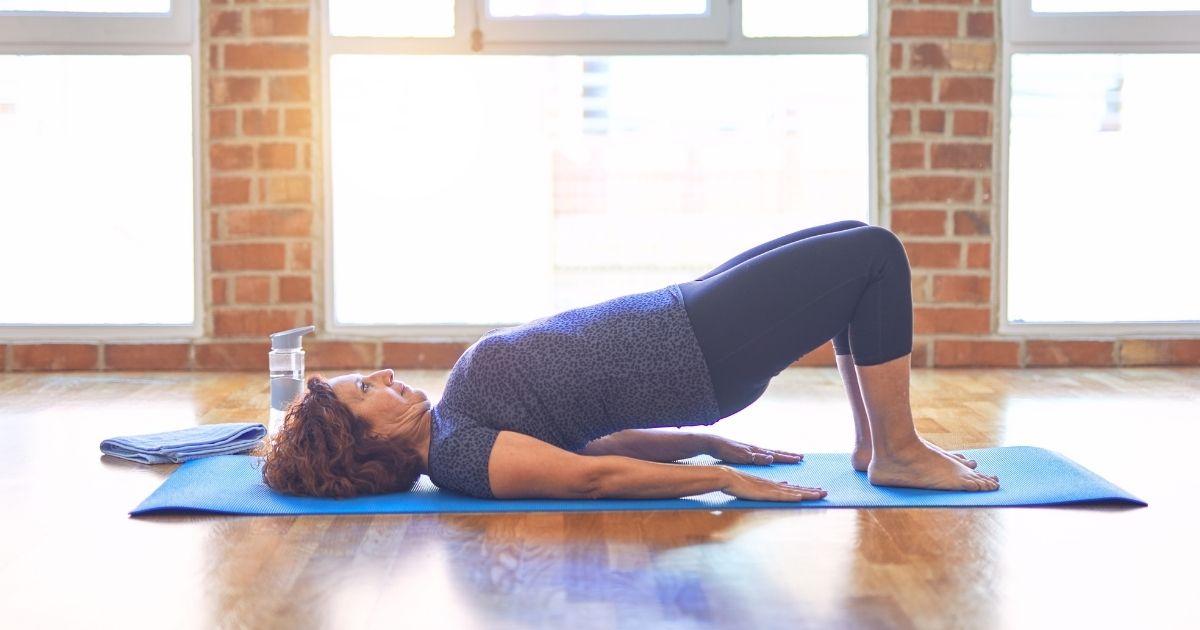
Set up. Lie on your back with knees bent and feet hip-width apart. Place the arms by your sides with palms down. Find a neutral head and neck, then lengthen the back of the neck slightly.
-
Lift. Press through the feet, lift the pelvis, and slowly roll the whole back upwards, one section at a time. If it is comfortable, interlace the fingers and walk the shoulders under to anchor the upper chest. If interlacing is not appropriate, press the arms into the floor to create the same anchoring effect.
-
Breathing. Breathe slowly and quietly. Sense the abdomen and lower ribs moving on the inhale. If you notice the breath climbing into the upper chest, reduce the height of the pose or release and reset.
-
Duration. Hold long enough to create meaningful leg work without strain. You can build from short, steady holds to longer holds that lead to a clear post-effort quietening.
-
Exit. Release slowly and place the spine down one segment at a time, then rest. Notice the drop in heart rate and the quality of the breath.
Inclusivity and Alternatives
-
If chest-to-chin is not available: Use a seated chin-to-chest with slow breathing for several breaths to access the carotid sinus effect without the backbend shape.
-
If clasping is not available: Press the arms into the floor to stabilise the shoulders. You can also hold a strap between the hands to approximate the anchor without strain.
-
If leg fatigue is not desired: Use repetitions of shorter holds rather than one long hold to moderate the post-exercise response.
When to Be Cautious
-
People with known carotid artery disease, a history of fainting with neck pressure, uncontrolled hypertension, or significant cervical spine issues should avoid chest-to-chin stimulation and should not palpate the carotid area. Choose the breathing and leg work components without the neck element.
-
If there is acute low back pain, sacroiliac pain, or recent abdominal or thoracic surgery, modify the height and duration or choose a supported version with blocks.
-
For glaucoma or conditions where intraocular pressure is a concern, avoid breath holding and avoid shapes that place the head significantly lower than the heart.
The Take-Home
Backbends often raise sympathetic activity and make breathing more effortful. Bridge Pose can be different. It can stimulate the baroreceptors at the neck, it can lead into post-exercise hypotension after sustained leg work, and it can stabilise the upper chest so that breathing shifts to the diaphragm. Each process can be useful on its own. Together, they make Bridge Pose a rare backbend that can both lift and settle the system, and in many people can lower blood pressure in the minutes after release.