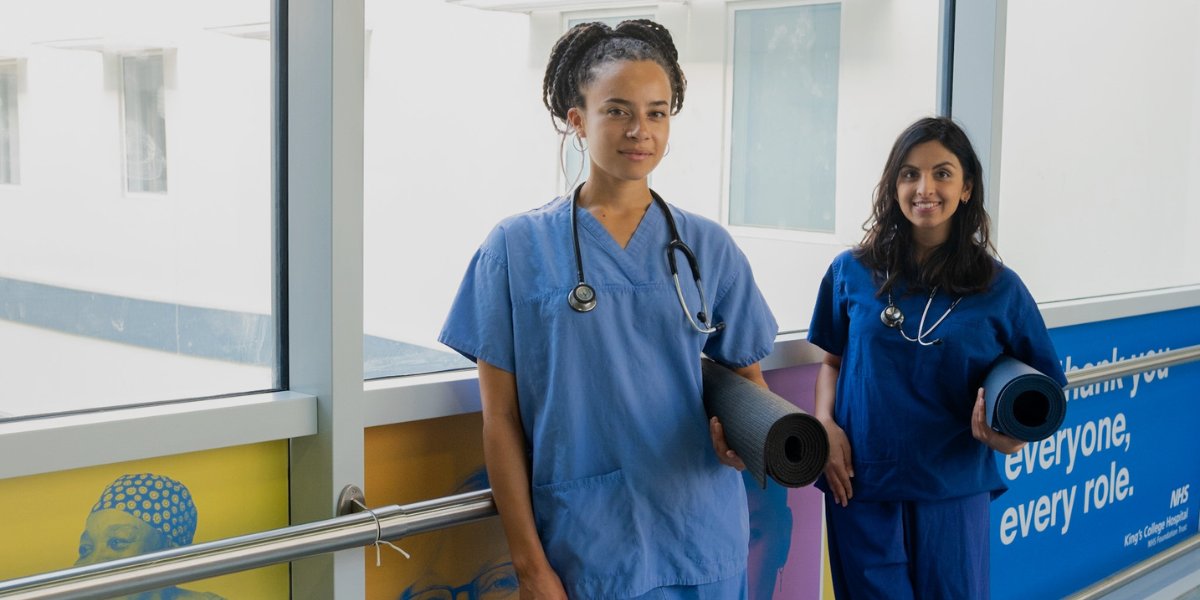
1 in 2 people in the UK will have cancer during their lifetime. Cancer Research UK estimates that in the UK over 375,000 people are diagnosed with cancer annually. Fortunately, techniques for treatment and earlier diagnosis mean that more and more people survive cancer than ever before. However, every individual diagnosed will likely experience painful and exhausting treatment, stress, and emotional trauma, and many people who enter remission following successful treatment are left with lengthy recoveries and long-lasting side-effects. Research into Yoga for Cancer Care is increasing. A recent Phase III multi-centered clinical trial on Restorative Yoga on prescription for cancer survivors found Yoga prevented recurrence!
Amongst cancer patients and survivors, there is growing demand for a more comprehensive and integrated approach to their care. Many healthcare providers and patients are exploring complementary treatments and therapies to expand their range of care, adjacent to their core pharmacological or biomedical treatment, seeking to improve symptom management and clinical outcomes.
We are excited to report that there is a growing body of evidence supporting the use of yoga and yoga therapy within an integrative approach to cancer care, addressing the physical, psychological, social and spiritual needs of cancer patients. In the United States, a few leading medical centres that specialise in cancer care (such as Houston’s M.D. Anderson, New York’s Memorial Sloan-Kettering, and Los Angeles’ UCLA-Jonsson Comprehensive) recognise the value of Yoga and offer it widely to their patients.
Cancer, In Simple Terms
Our bodies are constructed of billions of individual cells, and these cells come in many different types. Typically, our bodies maintain exactly the right number of each type of cell, with each cell growing and dividing over and over again to reproduce versions of itself. Each type of cell produces signals that communicate with other cells of the body, controlling how much and how quickly each cell grows and divides.
Each cell grows and divides according to its own set of instructions, or genes. Sometimes, random errors (or mutations) occur in these sets of instructions resulting in small changes to the cells that are produced. Mutations occur naturally all of the time in our healthy bodies, and almost always result in cells which either can’t successfully replicate or are destroyed by the body’s natural defences. Sometimes, however, a mutation can result in a cell which grows and functions abnormally – and these cells may not respond to the signals controlling its growth or division in a normal way. Cancer occurs when certain types of these abnormal cells begin growing and dividing in an uncontrolled way. If you are interested in further information about the underlying physiology and biology of cancer, you can delve deeper here or here.
There are over 200 different types of cancers. Each begins with the abnormal growth and division of certain types of cells, typically forming a growth known as a tumour. The primary tumour is the place where the cancer starts, but it can spread to other parts of the body. The first signs of cancer vary by type and depend on whether symptoms appear during the primary stages, or from the spread of cancer, known as metastasis. Naturally, these produce a wide variety of symptoms which are normally progressive. Further information on the range of cancer-related symptoms, and what to do if you experience any of these, is available here.
Treatments available for the range of known cancers are also varied, depending on the type and progression of the illness. Many cancers require treatment via surgery, chemotherapy, radiotherapy, or with targeted interventions like stem-cell therapy, immunotherapy, or bone marrow transplant. Basic information about various cancer treatments is available here.
Over the last 25 years, research into understanding, diagnosing and treating cancer has advanced significantly; with greater prevention, earlier diagnosis, and novel treatments, survival rates for a number of cancers have steadily increased. Sadly, the reality for most cancer patients is still very brutal, with cancer treatments carrying the inevitable risk of significant and life-changing side-effects. Many of these side-effects are very unpleasant, and are hard to live with on a daily basis; these can include pain, fatigue, nausea, reduced mobility, problems sleeping, and significant emotional distress. The vast majority of patients report a reduced quality of life, both during their treatment and after.
Yoga and Cancer Care
It’s important for us to be clear that there is no evidence that yoga, or any related holistic practice, can cure or prevent cancer. However, there is a growing body of evidence that yoga and yoga therapy can support patients in managing the symptoms of their illness, combatting side-effects of their treatments, and supporting their physical and emotional wellbeing as their illness progresses or as they recover in remission.
Clinical trials and emerging research continue to provide evidence supporting the use of targeted therapeutic yoga interventions for cancer patients and survivors. There is robust, long-standing evidence that yoga can help to reduce fatigue amongst cancer patients. There are also a range of studies showing that yoga has a positive effect on sleep, improving sleep quality and duration among cancer patients. Further evidence points to yoga being beneficial in reducing treatment-related nausea and reducing the impact of other common cancer treatment side-effects (such as inflammation or reduced mobility). Certain studies have concluded that yoga can help to manage chronic and treatment-related pain, with some additional evidence that targeted yoga interventions can reduce negative effects of peripheral neuropathy in cancer patients. A recent review of randomised controlled trials (RCTs) concluded that therapeutic Yoga reduces the effects of fatigue, stress and sleep problems, and can improve post-treatment inflammation and immune function in cancer patients.
Furthermore, a range of empirical evidence indicates that therapeutic yoga can help improve movement and mobility, flexibility, and balance in older adults and those recovering from surgeries or intensive treatments. There is also significant evidence that yoga can help to improve bone density and strength through regular practice, though we advise caution with any individual who presents with compromised bone strength or a relevant chronic condition, like Osteoporosis.
The widest range of evidence supports the benefits of therapeutic yoga for anxiety and depression, and there is a wealth of academic research supporting the use of therapeutic yoga for reducing chronic stress; including stress related to the treatment of serious diseases, such as cancer. A recent study, led by UCLA Jonsson Comprehensive Cancer Center, provided further evidence that Yogic techniques, including mindfulness meditation, significantly reduced the incidence and impact of depressive symptoms among breast cancer patients. This reinforces extensive research led by the M.D. Anderson Cancer Center, supporting the use of therapeutic yoga for the amelioration of psychological symptoms in cancer patients.
Conclusively, a recent meta-analysis indicated that yoga therapy supports improved overall reported quality of life in cancer patients, underlining why yoga is among the most popular and well-received complementary interventions for those with cancer.
Therapeutic Yoga in Cancer Care
As we review the growing evidence for the efficacy of therapeutic yoga as a complementary therapy within cancer care, we can appreciate the enormous potential that it has, and just how much more we must work to make yoga more available to cancer patients in the UK.
More yoga teachers and therapists with the appropriate skills and insights are needed to work with this growing and extremely varied population, with specialist training required to meet the many complexities of need. For example, unlike in regular yoga, we must take extra care around direct contact between the client’s skin and the floor or any props we are using; patients undergoing intensive cancer treatment often have lower levels of platelets in their blood, their skin may be weakened or struggling to heal, and peripheral areas of the body may be exceptionally sensitive.
We also want to avoid disturbing any sites of weakness (e.g. cannula sites), or introducing any unnecessary pressure or friction which may cause further pain or injury. In order to account for this, we teach our therapists to be particularly observant and mindful of their client’s body; including any sites of skin weakness, or inflamed areas of the body which may cause pain. We prioritise the use of smaller and slower movements, and the avoidance of repetitive movement with a specific area of the body. We also teach our therapists to be creative with their use of props, or how they introduce floor-based asana; aiming to minimise direct skin contact, and maximise comfort and warmth.
People with cancer need informed, professional teachers and therapists armed with robust, accurate knowledge, a wide range of skills, creativity, strength, and compassion to support them through the challenges of their cancer experience. Providers of complementary therapies must also possess the skills to understand and discuss the physical, psychological and social needs of their clients within an integrated, professional medical care team.
Read the latest research in the results of Restorative Yoga in Cancer Care here.
The Minded Institute Yoga Therapy Diploma, lead by field experts, will prepare you to work with yoga as a therapy. Although the diploma does not specifically cover cancer care, you will develop the critical skills needed to support a range of health conditions.
This training is open to qualified yoga teachers, teachers in training, complementary health practitioners and healthcare professionals. Curious to learn more? Click here for more details.
References
- Cancer Research UK
- American Association of Cancer Research
- MD Anderson Center
- Memorial Sloan Kettering Cancer Center
- UCLA-Jonsson Comprehensive Cancer Center
- Armer, J.S. and Lutgendorf, S.K., 2020. The impact of yoga on fatigue in cancer survivorship: a meta-analysis. JNCI cancer spectrum, 4(2), p.pkz098. DOI: 10.1093/jncics/pkz098
- Carson, J.W., Carson, K.M., Olsen, M., Sanders, L., Westbrook, K., Keefe, F.J. and Porter, L.S., 2021. Yoga practice predicts improvements in day-to-day pain in women with metastatic breast cancer. Journal of pain and symptom management, 61(6), pp.1227-1233. DOI: https://doi.org/10.1016/j.jpainsymman.2020.10.009
- Danhauer, S.C., Addington, E.L., Cohen, L., Sohl, S.J., Van Puymbroeck, M., Albinati, N.K. and Culos‐Reed, S.N., 2019. Yoga for symptom management in oncology: a review of the evidence base and future directions for research. Cancer, 125(12), pp.1979-1989. DOI: https://doi.org/10.1002/cncr.31979
- Mustian, K.M., 2013. Yoga as treatment for insomnia among cancer patients and survivors: a systematic review. European medical journal. Oncology, 1, p.106.
- Galantino, M.L., Tiger, R., Brooks, J., Jang, S. and Wilson, K., 2019. Impact of somatic yoga and meditation on fall risk, function, and quality of life for chemotherapy-induced peripheral neuropathy syndrome in cancer survivors. Integrative cancer therapies, 18, p.1534735419850627. DOI: https://doi.org/10.1177/1534735419850627
- Danhauer, S.C., Addington, E.L., Cohen, L., Sohl, S.J., Van Puymbroeck, M., Albinati, N.K. and Culos‐Reed, S.N., 2019. Yoga for symptom management in oncology: a review of the evidence base and future directions for research. Cancer, 125(12), pp.1979-1989. DOI: https://doi.org/10.1002/cncr.31979
- Galantino, M.L., Tiger, R., Brooks, J., Jang, S. and Wilson, K., 2019. Impact of somatic yoga and meditation on fall risk, function, and quality of life for chemotherapy-induced peripheral neuropathy syndrome in cancer survivors. Integrative cancer therapies, 18, p.1534735419850627. DOI: https://doi.org/10.1177/1534735419850627
- Hsueh, E.J., Loh, E.W., Lin, J.J.A. and Tam, K.W., 2021. Effects of yoga on improving quality of life in patients with breast cancer: a meta-analysis of randomized controlled trials. Breast Cancer, 28(2), pp.264-276.
- Danhauer, S.C., Addington, E.L., Sohl, S.J., Chaoul, A. and Cohen, L., 2017. Review of yoga therapy during cancer treatment. Supportive Care in Cancer, 25(4), pp.1357-1372. DOI: 10.1007/s00520-016-3556-9
- UCLA Health: Mindfulness meditation, survivorship classes reduce symptoms of depression in younger breast cancer survivors
- Narayanan, S., Francisco, R., Lopez, G., Chaoul, M.A. and Cohen, L., 2019. Role of yoga across the cancer care continuum: From diagnosis through survivorship. JCOM, 26(5).
- Lundt, A. and Jentschke, E., 2019. Long-term changes of symptoms of anxiety, depression, and fatigue in cancer patients 6 months after the end of yoga therapy. Integrative cancer therapies, 18, p.1534735418822096. DOI: https://doi.org/10.1177/1534735418822096
- Mascaro, J.S., Waller, A.V., Wright, L., Leonard, T., Haack, C. and Waller, E.K., 2019. Individualized, single session yoga therapy to reduce physical and emotional symptoms in hospitalized hematological cancer patients. Integrative Cancer Therapies, 18, p.1534735419861692. DOI: https://doi.org/10.1177/1534735419861692
- Loudon, A., Barnett, T., Piller, N., Immink, M.A., Visentin, D. and Williams, A.D., 2016. The effects of yoga on shoulder and spinal actions for women with breast cancer-related lymphoedema of the arm: A randomised controlled pilot study. BMC complementary and alternative medicine, 16(1), pp.1-15.